
Coral Spawning Season: A Month-by-Month Guide to Reef Life Cycles
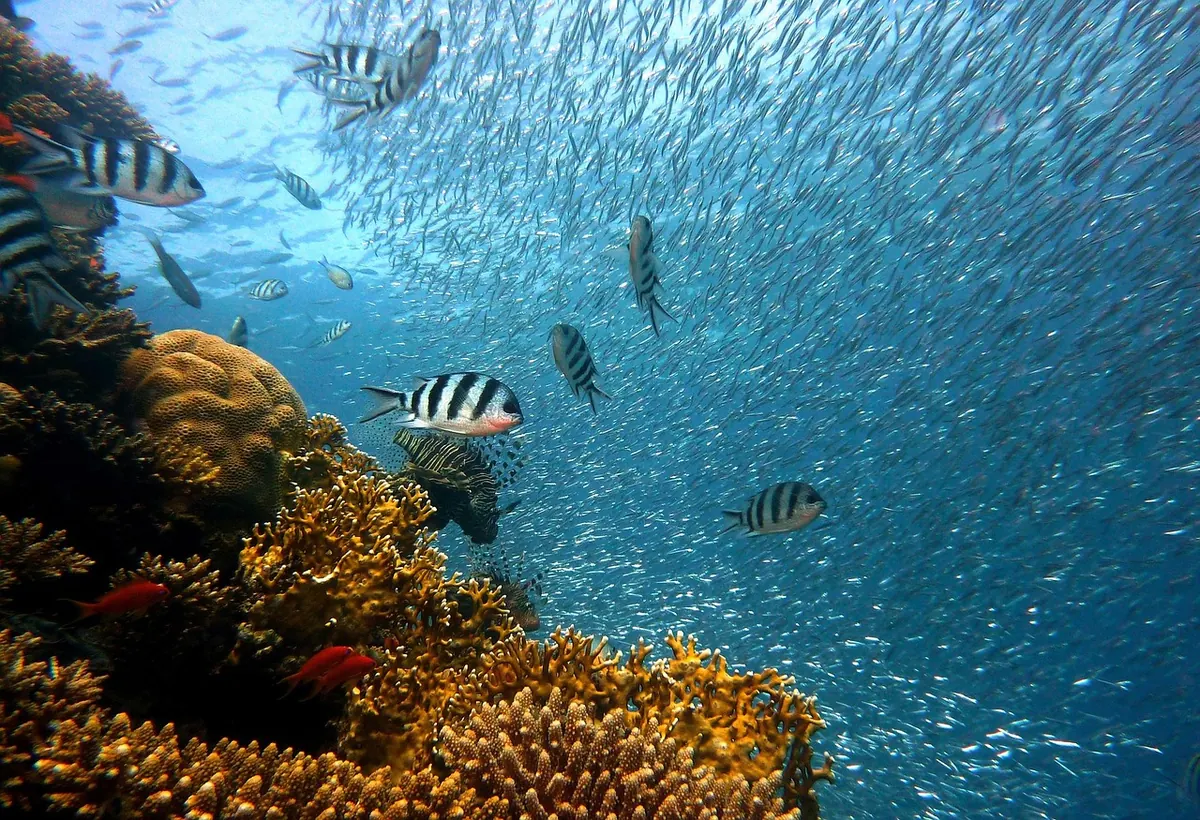
Coral spawning happens in the dark, on a handful of nights a year, inside a window that can open and close in less than an hour. Get the timing wrong and you see an ordinary reef. Get it right and the water fills with pink and orange bundles rising slowly towards the surface, like snow falling upwards. The reef's calendar is written in water temperature, daylight and moonlight — not in dates on a page.
What sets the date
Three signals combine to produce a spawning night, and they work on different timescales. The first is seasonal. Corals need weeks or months of warming before eggs and sperm are ready, and shortening or lengthening days reinforce that long-range cue. The second is lunar: the exact night is anchored to the moon. The third is the fall of darkness itself.
- Seasonal warmth. Colonies condition as sea temperatures climb towards their annual peak. An unusually cool spell can delay a spawn or cancel it altogether.
- Lunar phase. Most broadcast spawners release two to six nights after a full moon, though a number of species use the new moon instead.
- Sunset. On the night itself, the fading light after dusk appears to be the final trigger. Spawning usually starts one to four hours after sunset.
- Sea state. Calm water, weak currents and small tides are often associated with the biggest spawning nights, though the reasons are still debated.
None of these cues works alone. Remove the warm season and the lunar signal comes to nothing. Remove the moon and colonies in the same area may spawn raggedly over several weeks rather than in one coordinated pulse.
The mass spawning window
On the Great Barrier Reef and at many Indo-Pacific sites, dozens of species spawn across the same few nights, an event usually described as mass spawning. The synchrony matters: by releasing at the same time, colonies raise the odds of fertilisation in water that quickly dilutes gametes, and they overwhelm the appetite of predators that would otherwise pick off individual bundles.
Some years the event splits. A proportion of colonies spawn after one full moon and the rest after the next, spreading the risk across two months. Caribbean reefs run a smaller, looser version of the same phenomenon, with fewer species joining in over a longer period.
Month by month, region by region
Treat the following as a rough map rather than a timetable. Local conditions shift dates by weeks, and no two years are identical.
- January. Southern Hemisphere reefs are past their main window, but late or second-round spawns can still occur on the Great Barrier Reef and parts of the Coral Triangle. Northern tropics are quiet.
- February to March. A fallow period for most broadcast spawners in both hemispheres. Brooding corals such as Pocillopora continue releasing larvae on a lunar rhythm.
- April. Spring spawning begins in the Red Sea and parts of the Indo-Pacific. Reefs off Western Australia have been observed spawning in the autumn months, which breaks the usual summer pattern.
- May. Early spawns in the Red Sea and South-East Asia. Caribbean species are conditioning but not yet releasing.
- June. Reefs around Okinawa and southern Japan spawn, typically around a full moon. The Red Sea continues.
- July. Indonesia, the Philippines and the Red Sea are active. Some Caribbean species begin, though the main event is still ahead.
- August. The Caribbean's biggest month. Elkhorn and staghorn Acropora, the Orbicella complex and several brain corals spawn in the nights after the full moon, in Florida and across the wider region.
- September. A second Caribbean wave around the September full moon, often involving species that skipped August.
- October. The Great Barrier Reef's earliest spawns can appear in some years. Red Sea activity tails off.
- November. The Indo-Pacific's headline month. Mass spawning on the Great Barrier Reef usually follows the November full moon.
- December. A second sequence on the Great Barrier Reef in split-spawning years, plus further activity in the Coral Triangle.
Broadcasters, brooders and what you will actually see
Most reef-building corals are broadcast spawners: they pack sperm and eggs into buoyant bundles, push them out through the polyp mouth, and let the current do the rest. Acropora staghorn and table corals are the classic examples, along with Porites, Platygyra and Favites. Watch a colony closely and you may see bundles sitting at the polyp mouths for a minute or two before they lift away.
Brooders take a different route. Species such as Pocillopora, Stylophora and Agaricia fertilise eggs internally and release developed larvae, often on a monthly lunar cycle and sometimes year-round. Their output is less dramatic, but it happens far more often — useful if you want a realistic chance of seeing something.
Planning a spawning watch
- Choose your region first. Confirming the local spawning season matters more than any other preparation.
- Find the full moon date, then count forward. Book two to six nights after it, and be ready to go out on consecutive evenings.
- Track water temperature in the preceding weeks. A cool run often pushes spawning later.
- Pick a site you already know in daylight, with a mix of species and straightforward, sheltered access.
- Get in before sunset. If it happens, it usually happens early in the night.
- Dive with a buddy and proper night-diving training if you are going below the surface. This is not the evening to test unfamiliar kit.
Watching without disturbing the reef
Spawning is the most vulnerable point in a coral's year, and a careless observer can undo the very thing they came to see. Use a red filter or a dimmed beam, and keep torch light off colonies wherever you can — bright white light at close range can interfere with the cues colonies are responding to. Hold your position rather than swimming through the slick of floating bundles; eggs and sperm are fragile, and a fin stroke through a spawning cloud does real damage for no reason.
Stay off the substrate entirely. No kneeling, no pushing off, no anchoring, and no collecting, even a single bundle. If you are watching from a jetty or pontoon, you can often see the surface film turn pink without entering the water at all.
Record what you see. Sightings sent to reef monitoring programmes help build a picture of spawning times across regions and years, and that information is genuinely useful to the people working on reef recovery. Check local marine park rules before you go, particularly around night access and permits.
And if nothing happens? You have still spent an evening on a living reef after dark, which is rarely a wasted trip. Try again the next night. The corals are working to a schedule of their own, and it rewards patience more than precision.
Photo: joakant / Pixabay