
Coral Bleaching Explained: Causes, Signs and What UK Divers Can Do
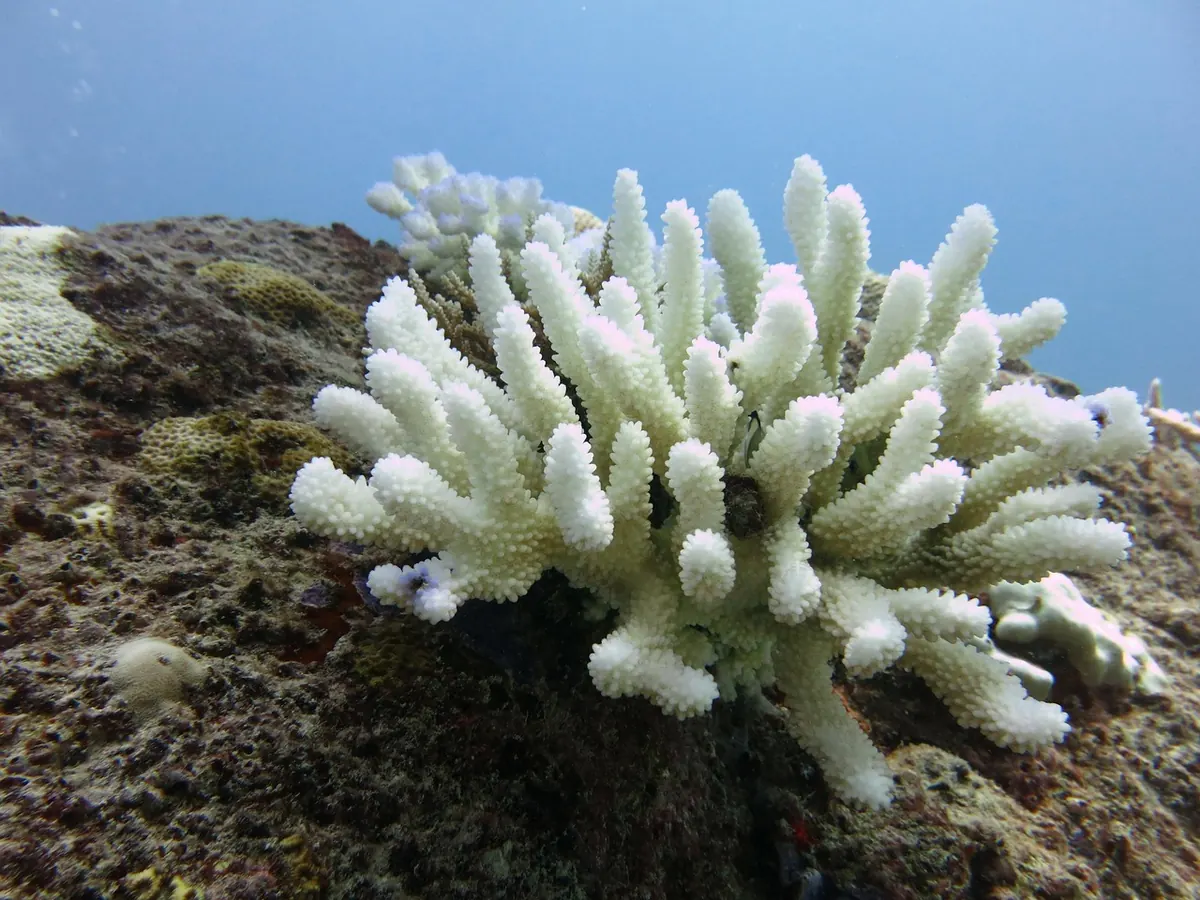
You drop onto a shallow reef you last dived three years ago. The staghorn thickets that were rust-brown and lilac are now the colour of bone china, and the parrotfish that used to nibble past your mask are working a bare white slope. Nothing else in the water has changed. Bleaching is one of the clearest warnings a reef can give you, and one of the most misunderstood. It is not simply "coral dying", and it is not something that only matters to people living beside the tropics. Here is what is going on inside the coral, how to read the signs on your next dive, and the practical things UK divers and snorkellers can do about it.
What bleaching actually is
Reef-building corals are not one organism but a partnership. The coral animal builds a limestone skeleton and lives inside its own transparent tissue; tucked within that tissue are single-celled algae called zooxanthellae. The algae photosynthesise, feeding the coral with sugars and lending it most of its colour, from olive and ochre to deep chocolate. The coral, in return, gives the algae shelter and nutrients.
When water gets too warm for too long, that partnership breaks down. Heat disrupts the algae's photosynthesis, and the process starts producing damaging molecules that harm the coral. The coral's response is to eject the algae — sometimes all of them, sometimes only from part of the colony. What is left is transparent tissue over a white calcium carbonate skeleton. That is the white you see. The coral itself may still be alive at this point, and its own remaining pigments are what create those strange, glowing patches of neon blue, purple or pink that divers sometimes notice before a colony turns pale.
Why it happens, and why the small stuff matters
The main trigger is sustained heat. Corals live close to their upper temperature limit, so a marine heatwave — water sitting a degree or two above the usual summer maximum for weeks — can tip a reef into bleaching. Strong El Niño years tend to bring widespread events, but local conditions decide how badly any particular reef suffers. Sheltered bays, shallow flats and reefs already under pressure bleach first and recover slowest.
This is where human activity away from the waterline comes in. Sediment washing off cleared land, agricultural runoff, poorly treated sewage and dredging all cloud the water and stress corals. Anchors and dragged chains break colonies outright. Heavy fishing of herbivores such as parrotfish and surgeonfish leaves algae free to smother dead coral and block new coral larvae from settling. Bleaching is driven by global warming, but the resilience of an individual reef is largely local — and local pressures are the ones we can influence fastest.
Signs to look for on a dive
Bleaching rarely appears overnight as pure white. Watch for a sequence:
- Paling. Colours look washed out, as though someone turned the saturation down. Branching corals lose depth of colour first.
- Fluorescence. A colony that seems to glow — vivid purple, sapphire or pink — is often producing protective pigments in response to heat.
- Stark white patches. Bleaching is frequently uneven, with the sunlit top of a colony white while the shaded side stays pigmented.
- Soft corals and clams too. They bleach as well, often looking limp, deflated or translucent rather than white.
- White with fuzz. A thin green or brown film over a white skeleton usually means algae are colonising dead coral, not that the coral is recovering.
The most useful habit is repeat observation. Photograph the same bommie, the same patch of reef, on every trip, from the same angle. A single glance tells you little; a series of images across years tells you a great deal, and that record has real value to reef monitoring.
Bleached does not automatically mean dead
Coral can recover. If the water cools in time, the coral can take algae back from the water column or from surviving tissue, and colour returns over weeks or months. Fast-growing branching species sometimes bounce back within a few years. But a bleached coral is running on stored energy, and it is vulnerable — to disease, to further heat, to being overgrown. Recovery needs a run of calm years. When severe bleaching returns before a reef has rebuilt, colonies die and the reef shifts towards rubble and weed. That is the pattern that turns a bad summer into a permanent change.
What UK divers and snorkellers can do
On the reef
Buoyancy is the single most useful reef skill you own. Practise until you can hover a metre above the coral without touching it, and re-take a buoyancy course if it has been a while. Keep your kit streamlined so hoses and consoles do not trail across the reef. Do not wear gloves in the tropics; they mostly serve as an invitation to grab. Never kneel on coral for a photograph, and keep fin kicks short and level, particularly over sand, so you are not smothering polyps in silt.
- Choose operators who use moorings instead of anchors, brief on reef etiquette, cap group sizes, and provide drinking water rather than single-use bottles.
- Cover up instead of relying on sunscreen: rash vest, leggings, hat. If you do use sunscreen, apply it well before getting in and favour mineral formulas containing zinc or titanium dioxide. Some destinations restrict certain ingredients, and the evidence on others is still developing — a long-sleeved top removes the question entirely.
- Spread the load. Dive lesser-known sites and quieter moorings rather than the same famous bommies every day.
- Record what you see. Citizen science programmes such as CoralWatch and Reef Check train recreational divers to log coral health and bleaching. If you dive in UK waters, Seasearch does the same for our own seabed.
- Support the home patch too. British and northern European seas hold cold-water coral, maerl beds, seagrass and kelp forests, all under their own pressures. Reporting what you find and backing marine protected areas matters here as much as abroad.
- Think about how you travel. One longer trip usually costs the atmosphere far less than several short-haul reef hops, and a few weekends diving in the UK or Europe will keep your skills sharp between flights.
Start with your next dive
You do not need to fix the climate before your next trip. Pick one thing and do it properly: get your buoyancy truly dialled in, log water temperature and coral condition alongside your usual dive notes, photograph a fixed patch of reef, or ask your chosen dive centre what they do about moorings, waste and group sizes. Then tell the people you dive with. Reefs respond to pressure, and they also respond when that pressure lifts — which is exactly why the small, repeated choices made by visiting divers still count for something.
Photo: Veroniqueafm / Pixabay